Storing and handling old books
Most damage to old books is slow and avoidable. A good shelf in the right room does most of the work.
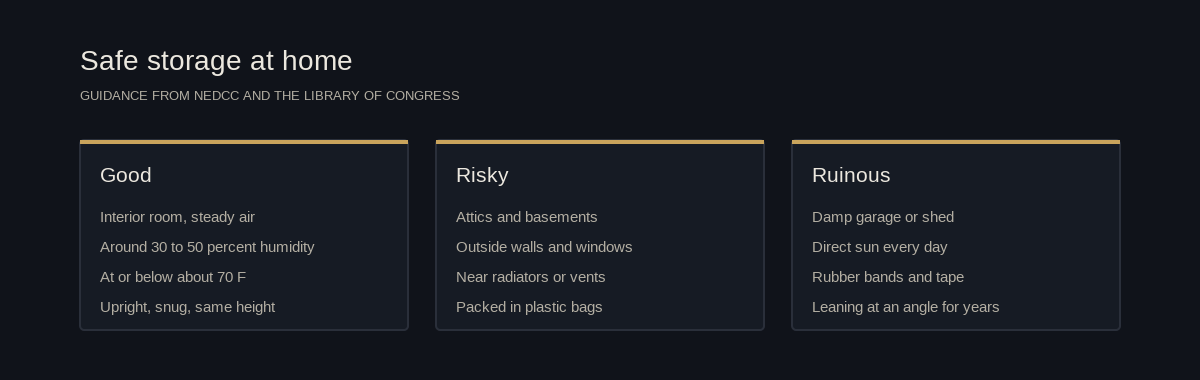
The right room
Pick an interior room where people are comfortable, away from outside walls, radiators and air vents. The Northeast Document Conservation Center recommends a stable relative humidity, roughly 30 to 50 percent, and a temperature at or below about 70 degrees Fahrenheit. Above about 65 percent humidity, mold becomes a real risk.
Attics and basements are the worst places in most houses. They swing between hot and cold, damp and dry, and they flood.
On the shelf
Shelve books upright, beside books of similar height, snug but not tight. Lay very large or heavy books flat, no more than a few high. Use bookends so nothing leans for years. Keep books a little in from the edge of the shelf, and off the floor.
In your hands
Wash and dry your hands first. The Library of Congress notes that clean, dry hands are generally better than cotton gloves for handling books, because gloves reduce your grip and can catch on fragile pages. Support an open book with foam wedges or rolled towels. Use a pencil, never a pen, near rare books, and never use sticky notes or paper clips.
If something goes wrong
If books get wet, the NEDCC publishes emergency guidance on air-drying and freezing. Act within 48 hours to prevent mold. For valuable books, call a conservator first. Our guide to the parts of a book will help you describe the damage clearly.
Common questions
Should I keep books in plastic bags?
No. Sealed plastic can trap moisture. Use archival boxes or acid-free paper wraps instead.
Is air conditioning good for books?
Usually, yes, because it keeps temperature and humidity steadier. Avoid placing books right in front of a vent.