Caring for leather bindings
The kindest thing you can do for an old leather binding is usually less than you think.
Red rot
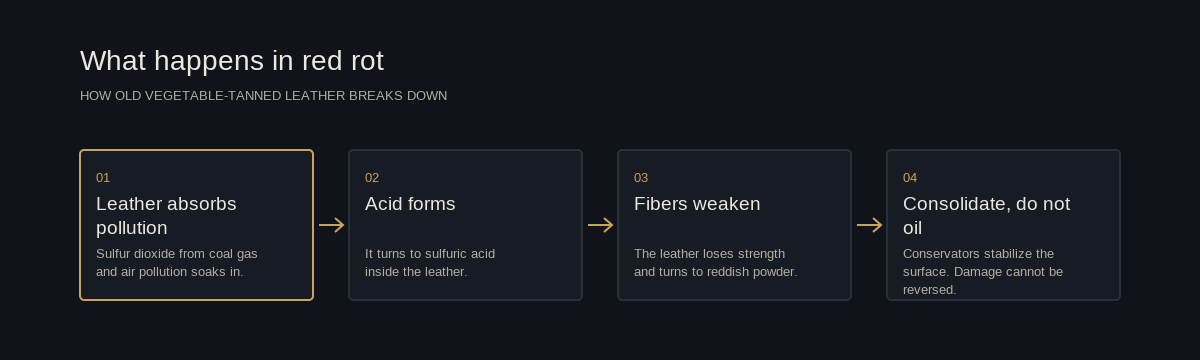
Many leather bindings from the nineteenth century have spines that leave reddish brown powder on your fingers. That is red rot. It happens when vegetable-tanned leather absorbs sulfur dioxide, from coal-gas lighting and air pollution, which forms sulfuric acid inside the leather. The fibers break down. The damage cannot be reversed.
Conservators stabilize red rot by applying a consolidant, often hydroxypropyl cellulose dissolved in alcohol, which binds the surface so it stops shedding. That is work for a trained person, especially on valuable books.
About leather dressing
For decades, collectors were told to rub oils or dressings into leather bindings. The Library of Congress and other preservation bodies now advise against routine dressing. Oils can wick into the paper, stain it, go rancid, and leave a sticky surface that attracts dust. They do not stop red rot.
What helps
Steady temperature and humidity help most. So does keeping books out of sunlight and away from heat. Store fragile leather bindings in a custom box, or wrap them in acid-free paper so the powder does not rub onto neighbors. Dust gently with a soft brush, working from the spine outward.
When to call a conservator
Detached boards, a spine falling away, mold, insect damage or water damage all need a professional. The American Institute for Conservation runs a Find a Conservator directory. Then read how to store and handle old books.
Common questions
Can I glue a loose board back on?
Not with household glue. It can stain and stiffen the binding and make proper repair harder. Tie the book with cotton tape and take it to a conservator.
What about saddle soap?
Avoid it on books. Water and soap can darken and weaken old leather.